CFP: ImageNext (UF conference: Dec. 31; Mar. 26-27)
Just posted to the Comics Scholars Discussion List...
 ImageNext:
The University of Florida's College of Liberal Arts and sciences is pleased to announce the 2010 UF Conference on Comics and Graphic Novels, "ImageNext: Visions Past and Future," which will be held in Gainesville, Florida on March 26 and 27. Guest speakers will include UCLA's David Kunzle (The History of the Comic Strip, Father of the Comic Strip: Rodolphe Töpffer), John Porcellino (King Cat), Molly Kiely (Diary of a Dominatrix, That Kind of Girl) and University of Iowa’s Corey Creekmur (Director of the Institute for Cinema and Culture).
This year's conference will focus on "comics" - in their broadest sense, which includes animation, manga, anime, graphic novels, webcomics, political cartoons, and even some "fine art" - that explore human history and alternate histories. Comics discussed may include reimaginings of the past (both personal and cultural), projections of the future and revisions of pre-existing timelines, fictional or historical. Presentations could address comics that represent historical periods and/or genres (i.e. classic comics, steampunk, etc.) or the historical precedents of comics as we now understand them (i.e. political cartoons in nineteenth-century newspapers, narrative paintings, etc.).
Possible topics include but are not limited to:
The conference will be held on the University of Florida campus.
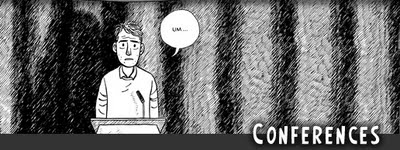
Image credit: Dylan Horrocks, from the UF Comics Conferences website.
 ImageNext:
Visions Past and Future Conference
University of Florida
March 26 and 27, 2010
University of Florida
March 26 and 27, 2010
The University of Florida's College of Liberal Arts and sciences is pleased to announce the 2010 UF Conference on Comics and Graphic Novels, "ImageNext: Visions Past and Future," which will be held in Gainesville, Florida on March 26 and 27. Guest speakers will include UCLA's David Kunzle (The History of the Comic Strip, Father of the Comic Strip: Rodolphe Töpffer), John Porcellino (King Cat), Molly Kiely (Diary of a Dominatrix, That Kind of Girl) and University of Iowa’s Corey Creekmur (Director of the Institute for Cinema and Culture).
This year's conference will focus on "comics" - in their broadest sense, which includes animation, manga, anime, graphic novels, webcomics, political cartoons, and even some "fine art" - that explore human history and alternate histories. Comics discussed may include reimaginings of the past (both personal and cultural), projections of the future and revisions of pre-existing timelines, fictional or historical. Presentations could address comics that represent historical periods and/or genres (i.e. classic comics, steampunk, etc.) or the historical precedents of comics as we now understand them (i.e. political cartoons in nineteenth-century newspapers, narrative paintings, etc.).
Possible topics include but are not limited to:
- comics in/as history (Rodolphe Topffer, George Cruikshank, John Leech)
- comics as cultural records (Maus, Persepolis, contemporary comic strips and political cartoons)
- biographical and autobiographical comics (Julie Doucet, Fun Home, With the Light, Epileptic)
- historically based genres (e.g. steampunk and cyberpunk, (post-)apocalyptic narratives)
- multiverses and alternate continuities (Crisis on Infinite Earths, 52, House of M, Marvel Zombies)
- comic book continuity reboots (Marvel, Ultimate Universe, etc.)
- the visual rhetoric of utopias and dystopias (Y The Last Man, Akira)
- the revision and reimagination of the superhero (Watchmen, Kingdom Come, Marvels, Astro City)
- comic adaptations and appropriations of literature ("Classic Comics," manga Shakespeare, League of Extraordinary Gentlemen)
The conference will be held on the University of Florida campus.
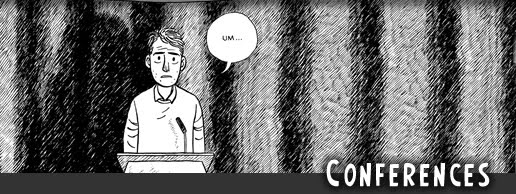
Image credit: Dylan Horrocks, from the UF Comics Conferences website.
Labels: academic, cfps, conferences, history, UF
posted by Gene Kannenberg, Jr. at 11/14/2009 10:21:00 AM

 Links to this post